

Pennsylvania Businesses Pay 22% More Than State's Average Electric Rate
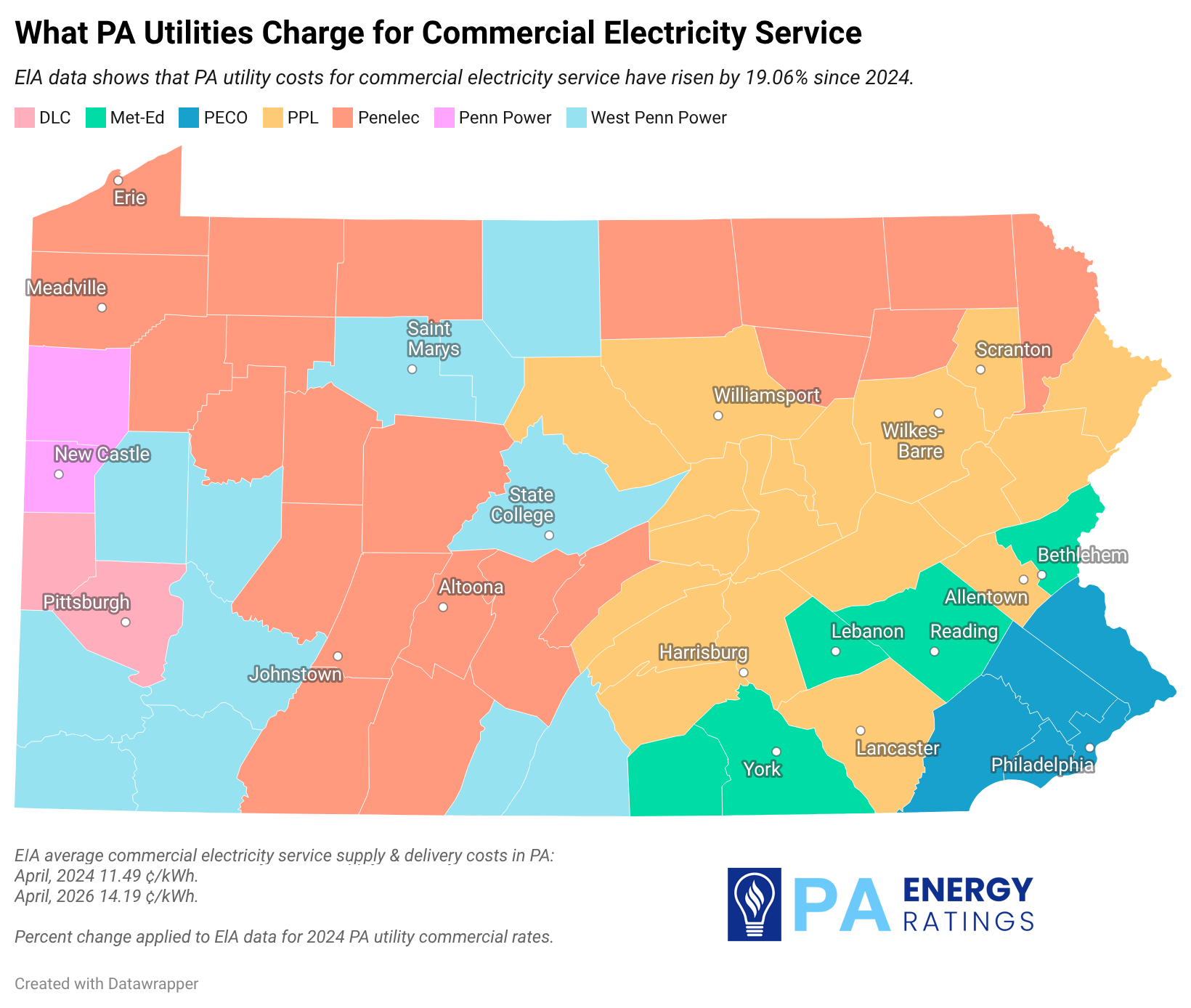
Pennsylvania's seven electric distribution utilities and the territories they serve. Commercial supply and delivery costs statewide averaged 14.19 ¢/kWh in April 2026, up from 11.49 ¢/kWh two years earlier. (Source: U.S. Energy Information Administration)
Pennsylvania businesses pay 22% more than the state's average electric rate. Learn what's driving the 20% two-year increase — and how to cut your bill.
PHILADELPHIA, PA, UNITED STATES, August 5, 2026 /EINPresswire.com/ -- PA Utility Commercial Electric Rates Surge 20% in Two Years, Experts Say Switch NowPennsylvania business electricity rates now sit 22% above the state average, according to a new analysis. Nationwide, commercial electricity prices rose 6.71% since April 2024, climbing from 12.66 cents per kilowatt hour to 13.51 cents in April 2026. Pennsylvania businesses, however, saw their rates jump nearly 20% during that same stretch. Tight energy supplies drove capacity auction prices higher across the PJM grid in 2024. Pennsylvania businesses felt the impact quickly, especially from the state's four investor-owned utilities: Duquesne Light, FirstEnergy Pennsylvania, PECO, and PPL.
Recent U.S. Energy Information Agency data now ranks Pennsylvania tenth in the nation for the sharpest rise in commercial electric rates. But because EIA's state averages also include lower cost coops and municipal utilities, those numbers mask what most businesses actually pay to the state's big four utilities.
Researchers at PAEnergyRatings.com found that these four major utilities charged an average of 13.99 cents per kilowatt hour in 2024, 22% above the state's blended average of 11.49 cents. Because these four companies serve 99% of the state's ratepayers, it's important that business customers understand how much their PA commercial electricity costs them.
Researchers noted that the state average commercial electric rate rose from 11.49 cents per kWh in April, 2024 to 13.68 cents per kWh in April 2026, a 19.06% increase. By applying that same growth rate to the four major utilities, researchers estimated that 2026 commercial electric rates now range from 14.01 cents (PPL) to 18.95 cents (FirstEnergy Pennsylvania) per kilowatt hour.
This now brings the average rate for the four major investor-owned utility companies to 16.66 cents per kWh. As a result, a typical business using 6,000 kilowatt hours monthly could now pay close to $1,000 on its electric bill, about $160 more than in 2024.
Unlike residential bills, where the utility delivery charge makes up most of the cost, commercial bills are driven mainly by the energy supply rate. This means businesses still paying their utility's default supply rates likely pay far more than necessary. And with the EIA forecasting that electricity rates will likely increase this coming fall, business customers may see their default supply rates from their utilities rise further when those rates expire on November 30, 2026.
Business owners can protect themselves by comparing rates with Pennsylvania electricity suppliers. Sites like PAEnergyRatings.com can help businesses shop competing suppliers and often find savings of up to 50% compared to their utility's default rate.
Find the full PA Commercial Study Here: https://www.paenergyratings.com/resources/pennsylvania-commercial-electricity-rates-surge-20-percent-in-two-years
PAEnergyRatings.com is operated by Lumanex LLC
Lumanex LLC operates an energy management platform and a network of energy shopping websites across 11 states across 56 utilities, providing our advisory, comparison and ratings service to over 58 million residential and commercial customers. We provide our customers with the power to choose the best providers through our consumer reviews platform and provide a reliable, unbiased, source of valuable consumer insight, advice, in-depth energy company service evaluations, and personalized recommendations.
Lumanex LLC
https://www.PAEnergyRatings.com
866-344-1149
Vernon Trollinger
PAEnergyRatings.com
email us here
Legal Disclaimer:
EIN Presswire provides this news content "as is" without warranty of any kind. We do not accept any responsibility or liability for the accuracy, content, images, videos, licenses, completeness, legality, or reliability of the information contained in this article. If you have any complaints or copyright issues related to this article, kindly contact the author above.
